
当前位置:
X-MOL 学术
›
J. Hydrol.
›
论文详情
Our official English website, www.x-mol.net, welcomes your
feedback! (Note: you will need to create a separate account there.)
Improving SPI-derived drought forecasts incorporating synoptic-scale climate indices in multi-phase multivariate empirical mode decomposition model hybridized with simulated annealing and kernel ridge regression algorithms
Journal of Hydrology ( IF 6.3 ) Pub Date : 2019-09-01 , DOI: 10.1016/j.jhydrol.2019.06.032 Mumtaz Ali , Ravinesh C. Deo , Tek Maraseni , Nathan J. Downs
Journal of Hydrology ( IF 6.3 ) Pub Date : 2019-09-01 , DOI: 10.1016/j.jhydrol.2019.06.032 Mumtaz Ali , Ravinesh C. Deo , Tek Maraseni , Nathan J. Downs
|
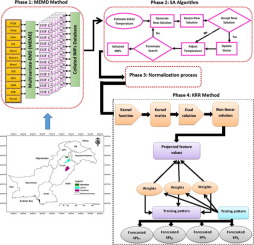
Abstract New and improved drought models based on the World Meteorological Organization approved Standardized Precipitation Index, principally at multiple timescale horizons, are providing significant benefits to the hydrological community, by its widespread acceptance in the sub-field of water resources management, sustainable water use and precision agriculture. In this research paper, the existing challenges faced by a drought forecasting model trained at multiple time-scales are resolved where a new multi-phase, multivariate empirical mode decomposition model integrated with simulated annealing and Kernel ridge regression algorithms (i.e., MEMD-SA-KRR) is designed to attain significantly accurate drought forecasts for 3 agricultural sites (i.e., Faisalabad, Islamabad and Jhelum, located in Pakistan). Utilizing the multi-scalar Standardized Precipitation Index (SPI) time series as a target variable for characterization of drought, twelve multivariate datasets (derived from statistically significant lagged combinations of precipitation, temperature & humidity), that are enriched with eight synoptic-scale climate mode indices and periodicity, are utilized in designing a new drought model. The study constructs a hybrid MEMD-SA-KRR model, where firstly, the data are partitioned into their respective training and testing subsets after creating historically lagged SPI at timescale (t – 1). Secondly, the MEMD algorithm is conditioned to demarcate multivariate climate indices from their training and testing sets, separately, into their decomposed intrinsic mode functions (IMFs) and residues. Thirdly, the SA method is employed to decide the most suitable IMFs. Finally, the KRR algorithm is applied to the selected IMFs to forecast multi-scaler SPI, at 1-, 3-, 6- and 12-monthly forecast horizon. The results are benchmarked with Random Forest, integrated with MEMD and SA to develop the MEMD-SA-RF equivalent model. The multi-phase MEMD-SA-KRR model is tested geographically in Pakistan, revealing that the MEMD-SA-KRR hybrid model generates reliable performance in forecasting multi-scaler SPI series, relative to the comparative models based on error analysis metrics. The hybrid drought model incorporating the most pertinent synoptic-scale climate drivers, as the model inputs has significant implications for hydrological applications and water resources management including its potential use in drought policy and drought recovery plans.
中文翻译:

在与模拟退火和核岭回归算法混合的多相多元经验模式分解模型中结合天气尺度气候指数改进 SPI 衍生的干旱预测
摘要 基于世界气象组织批准的标准化降水指数的新的和改进的干旱模型,主要是在多个时间尺度范围内,通过在水资源管理、可持续水资源利用和精准农业。在这篇研究论文中,解决了在多个时间尺度训练的干旱预测模型面临的现有挑战,其中一个新的多阶段、多元经验模式分解模型与模拟退火和核岭回归算法(即 MEMD-SA- KRR) 旨在为 3 个农业地点(即位于巴基斯坦的费萨拉巴德、伊斯兰堡和杰赫勒姆)获得非常准确的干旱预报。利用多标量标准化降水指数 (SPI) 时间序列作为表征干旱的目标变量,12 个多元数据集(源自具有统计意义的降水、温度和湿度的滞后组合),丰富了八个天气尺度气候模式指数和周期性被用于设计新的干旱模型。该研究构建了一个混合 MEMD-SA-KRR 模型,首先,在时间尺度 (t – 1) 创建历史滞后的 SPI 之后,数据被划分为各自的训练和测试子集。其次,MEMD 算法有条件将多元气候指数从它们的训练和测试集中分别划分为它们分解的固有模式函数 (IMF) 和残差。第三,SA 方法用于确定最合适的 IMF。最后,将 KRR 算法应用于选定的 IMF,以在 1、3、6 和 12 个月的预测范围内预测多尺度 SPI。结果以随机森林为基准,与 MEMD 和 SA 集成以开发 MEMD-SA-RF 等效模型。多阶段 MEMD-SA-KRR 模型在巴基斯坦进行了地理测试,表明 MEMD-SA-KRR 混合模型相对于基于误差分析指标的比较模型在预测多尺度 SPI 序列方面具有可靠的性能。混合干旱模型包含最相关的天气尺度气候驱动因素,因为模型输入对水文应用和水资源管理具有重要意义,包括其在干旱政策和干旱恢复计划中的潜在用途。最后,将 KRR 算法应用于选定的 IMF,以在 1、3、6 和 12 个月的预测范围内预测多尺度 SPI。结果以随机森林为基准,与 MEMD 和 SA 集成以开发 MEMD-SA-RF 等效模型。多阶段 MEMD-SA-KRR 模型在巴基斯坦进行了地理测试,表明 MEMD-SA-KRR 混合模型相对于基于误差分析指标的比较模型在预测多尺度 SPI 序列方面具有可靠的性能。混合干旱模型包含最相关的天气尺度气候驱动因素,因为模型输入对水文应用和水资源管理具有重要意义,包括其在干旱政策和干旱恢复计划中的潜在用途。最后,将 KRR 算法应用于选定的 IMF,以在 1、3、6 和 12 个月的预测范围内预测多尺度 SPI。结果以随机森林为基准,与 MEMD 和 SA 集成以开发 MEMD-SA-RF 等效模型。多阶段 MEMD-SA-KRR 模型在巴基斯坦进行了地理测试,表明 MEMD-SA-KRR 混合模型相对于基于误差分析指标的比较模型在预测多尺度 SPI 序列方面具有可靠的性能。混合干旱模型包含最相关的天气尺度气候驱动因素,因为模型输入对水文应用和水资源管理具有重要意义,包括其在干旱政策和干旱恢复计划中的潜在用途。KRR 算法应用于选定的 IMF,以在 1、3、6 和 12 个月的预测范围内预测多尺度 SPI。结果以随机森林为基准,与 MEMD 和 SA 集成以开发 MEMD-SA-RF 等效模型。多阶段 MEMD-SA-KRR 模型在巴基斯坦进行了地理测试,表明 MEMD-SA-KRR 混合模型相对于基于误差分析指标的比较模型在预测多尺度 SPI 序列方面具有可靠的性能。混合干旱模型包含最相关的天气尺度气候驱动因素,因为模型输入对水文应用和水资源管理具有重要意义,包括其在干旱政策和干旱恢复计划中的潜在用途。KRR 算法应用于选定的 IMF,以在 1、3、6 和 12 个月的预测范围内预测多尺度 SPI。结果以随机森林为基准,与 MEMD 和 SA 集成以开发 MEMD-SA-RF 等效模型。多阶段 MEMD-SA-KRR 模型在巴基斯坦进行了地理测试,表明 MEMD-SA-KRR 混合模型相对于基于误差分析指标的比较模型在预测多尺度 SPI 序列方面具有可靠的性能。混合干旱模型包含最相关的天气尺度气候驱动因素,因为模型输入对水文应用和水资源管理具有重要意义,包括其在干旱政策和干旱恢复计划中的潜在用途。结果以随机森林为基准,与 MEMD 和 SA 集成以开发 MEMD-SA-RF 等效模型。多阶段 MEMD-SA-KRR 模型在巴基斯坦进行了地理测试,表明 MEMD-SA-KRR 混合模型相对于基于误差分析指标的比较模型在预测多尺度 SPI 系列方面具有可靠的性能。混合干旱模型包含最相关的天气尺度气候驱动因素,因为模型输入对水文应用和水资源管理具有重要意义,包括其在干旱政策和干旱恢复计划中的潜在用途。结果以随机森林为基准,与 MEMD 和 SA 集成以开发 MEMD-SA-RF 等效模型。多阶段 MEMD-SA-KRR 模型在巴基斯坦进行了地理测试,表明 MEMD-SA-KRR 混合模型相对于基于误差分析指标的比较模型在预测多尺度 SPI 序列方面具有可靠的性能。混合干旱模型包含最相关的天气尺度气候驱动因素,因为模型输入对水文应用和水资源管理具有重要意义,包括其在干旱政策和干旱恢复计划中的潜在用途。揭示相对于基于误差分析指标的比较模型,MEMD-SA-KRR 混合模型在预测多尺度 SPI 序列方面具有可靠的性能。混合干旱模型包含最相关的天气尺度气候驱动因素,因为模型输入对水文应用和水资源管理具有重要意义,包括其在干旱政策和干旱恢复计划中的潜在用途。揭示相对于基于误差分析指标的比较模型,MEMD-SA-KRR 混合模型在预测多尺度 SPI 序列方面具有可靠的性能。混合干旱模型包含最相关的天气尺度气候驱动因素,因为模型输入对水文应用和水资源管理具有重要意义,包括其在干旱政策和干旱恢复计划中的潜在用途。
更新日期:2019-09-01
中文翻译:
在与模拟退火和核岭回归算法混合的多相多元经验模式分解模型中结合天气尺度气候指数改进 SPI 衍生的干旱预测
摘要 基于世界气象组织批准的标准化降水指数的新的和改进的干旱模型,主要是在多个时间尺度范围内,通过在水资源管理、可持续水资源利用和精准农业。在这篇研究论文中,解决了在多个时间尺度训练的干旱预测模型面临的现有挑战,其中一个新的多阶段、多元经验模式分解模型与模拟退火和核岭回归算法(即 MEMD-SA- KRR) 旨在为 3 个农业地点(即位于巴基斯坦的费萨拉巴德、伊斯兰堡和杰赫勒姆)获得非常准确的干旱预报。利用多标量标准化降水指数 (SPI) 时间序列作为表征干旱的目标变量,12 个多元数据集(源自具有统计意义的降水、温度和湿度的滞后组合),丰富了八个天气尺度气候模式指数和周期性被用于设计新的干旱模型。该研究构建了一个混合 MEMD-SA-KRR 模型,首先,在时间尺度 (t – 1) 创建历史滞后的 SPI 之后,数据被划分为各自的训练和测试子集。其次,MEMD 算法有条件将多元气候指数从它们的训练和测试集中分别划分为它们分解的固有模式函数 (IMF) 和残差。第三,SA 方法用于确定最合适的 IMF。最后,将 KRR 算法应用于选定的 IMF,以在 1、3、6 和 12 个月的预测范围内预测多尺度 SPI。结果以随机森林为基准,与 MEMD 和 SA 集成以开发 MEMD-SA-RF 等效模型。多阶段 MEMD-SA-KRR 模型在巴基斯坦进行了地理测试,表明 MEMD-SA-KRR 混合模型相对于基于误差分析指标的比较模型在预测多尺度 SPI 序列方面具有可靠的性能。混合干旱模型包含最相关的天气尺度气候驱动因素,因为模型输入对水文应用和水资源管理具有重要意义,包括其在干旱政策和干旱恢复计划中的潜在用途。最后,将 KRR 算法应用于选定的 IMF,以在 1、3、6 和 12 个月的预测范围内预测多尺度 SPI。结果以随机森林为基准,与 MEMD 和 SA 集成以开发 MEMD-SA-RF 等效模型。多阶段 MEMD-SA-KRR 模型在巴基斯坦进行了地理测试,表明 MEMD-SA-KRR 混合模型相对于基于误差分析指标的比较模型在预测多尺度 SPI 序列方面具有可靠的性能。混合干旱模型包含最相关的天气尺度气候驱动因素,因为模型输入对水文应用和水资源管理具有重要意义,包括其在干旱政策和干旱恢复计划中的潜在用途。最后,将 KRR 算法应用于选定的 IMF,以在 1、3、6 和 12 个月的预测范围内预测多尺度 SPI。结果以随机森林为基准,与 MEMD 和 SA 集成以开发 MEMD-SA-RF 等效模型。多阶段 MEMD-SA-KRR 模型在巴基斯坦进行了地理测试,表明 MEMD-SA-KRR 混合模型相对于基于误差分析指标的比较模型在预测多尺度 SPI 序列方面具有可靠的性能。混合干旱模型包含最相关的天气尺度气候驱动因素,因为模型输入对水文应用和水资源管理具有重要意义,包括其在干旱政策和干旱恢复计划中的潜在用途。KRR 算法应用于选定的 IMF,以在 1、3、6 和 12 个月的预测范围内预测多尺度 SPI。结果以随机森林为基准,与 MEMD 和 SA 集成以开发 MEMD-SA-RF 等效模型。多阶段 MEMD-SA-KRR 模型在巴基斯坦进行了地理测试,表明 MEMD-SA-KRR 混合模型相对于基于误差分析指标的比较模型在预测多尺度 SPI 序列方面具有可靠的性能。混合干旱模型包含最相关的天气尺度气候驱动因素,因为模型输入对水文应用和水资源管理具有重要意义,包括其在干旱政策和干旱恢复计划中的潜在用途。KRR 算法应用于选定的 IMF,以在 1、3、6 和 12 个月的预测范围内预测多尺度 SPI。结果以随机森林为基准,与 MEMD 和 SA 集成以开发 MEMD-SA-RF 等效模型。多阶段 MEMD-SA-KRR 模型在巴基斯坦进行了地理测试,表明 MEMD-SA-KRR 混合模型相对于基于误差分析指标的比较模型在预测多尺度 SPI 序列方面具有可靠的性能。混合干旱模型包含最相关的天气尺度气候驱动因素,因为模型输入对水文应用和水资源管理具有重要意义,包括其在干旱政策和干旱恢复计划中的潜在用途。结果以随机森林为基准,与 MEMD 和 SA 集成以开发 MEMD-SA-RF 等效模型。多阶段 MEMD-SA-KRR 模型在巴基斯坦进行了地理测试,表明 MEMD-SA-KRR 混合模型相对于基于误差分析指标的比较模型在预测多尺度 SPI 系列方面具有可靠的性能。混合干旱模型包含最相关的天气尺度气候驱动因素,因为模型输入对水文应用和水资源管理具有重要意义,包括其在干旱政策和干旱恢复计划中的潜在用途。结果以随机森林为基准,与 MEMD 和 SA 集成以开发 MEMD-SA-RF 等效模型。多阶段 MEMD-SA-KRR 模型在巴基斯坦进行了地理测试,表明 MEMD-SA-KRR 混合模型相对于基于误差分析指标的比较模型在预测多尺度 SPI 序列方面具有可靠的性能。混合干旱模型包含最相关的天气尺度气候驱动因素,因为模型输入对水文应用和水资源管理具有重要意义,包括其在干旱政策和干旱恢复计划中的潜在用途。揭示相对于基于误差分析指标的比较模型,MEMD-SA-KRR 混合模型在预测多尺度 SPI 序列方面具有可靠的性能。混合干旱模型包含最相关的天气尺度气候驱动因素,因为模型输入对水文应用和水资源管理具有重要意义,包括其在干旱政策和干旱恢复计划中的潜在用途。揭示相对于基于误差分析指标的比较模型,MEMD-SA-KRR 混合模型在预测多尺度 SPI 序列方面具有可靠的性能。混合干旱模型包含最相关的天气尺度气候驱动因素,因为模型输入对水文应用和水资源管理具有重要意义,包括其在干旱政策和干旱恢复计划中的潜在用途。






















































 京公网安备 11010802027423号