Kai Wang research group-Soft Lattice Advanced Mechanics (SLAM) lab
Soft Lattice Advanced Mechanics (SLAM) lab
Soft Lattice Advanced Mechanics (SLAM) lab
Biography
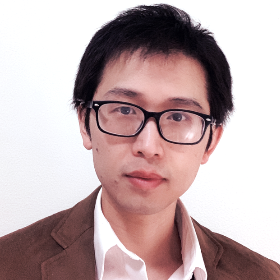
Kai Wang currently serves as an Independent PI at the Huanjiang Laboratory at the School of Aeronautics and Astronautics, Zhejiang University. Kai was named to the MIT Technology Review “Innovators Under 35” (Asia-Pacific, 2023) list and is a recipient of the National High-Level Young Talent Program (Overseas) (2023). His primary research focuses on innovative studies in the design, manufacturing, and application of new materials based on multi-physics field coupling principles, such as “Mechanic-Light-Electric-Thermal” interactions. His work spans soft lattice optoelectronic materials, third-generation solar cells, bio-flexible sensors, and bionic soft robotics. As first or corresponding author, Dr. Wang has published over 60 papers in journals such as Nature Synthesis, Nature Communications, Science Advances, Joule, and Matter, etc. His work has been cited more than 8,000 times according to Google Scholar, with an h-index of 50.
Link: https://scholar.google.com/citations?hl=en&user=yv0Bvl4AAAAJ;https://orcid.org/0000-0003-2783-1288
Education and Professional Experience:
2023-present, Huanjiang Laboratory (Zhuji), School of Aeronautics and Astronautics, Zhejiang University - PI
2018-2023, Pennsylvania State University - Research Assistant Professor
2017-2018, Virginia Tech - Postdoctoral Researcher; Advisor: Shashank Priya (Vice President for Research, University of Minnesota)
2012-2017, The University of Akron - Ph.D. in Polymer Engineering; Advisor: Xiong Gong
2011-2012, Institute of Chemistry, Chinese Academy of Sciences - Research Assistant; Collaborative Advisor: Yongfang Li (Academician, Chinese Academy of Sciences)
2007-2011, Beijing University of Chemical Technology - BSc in Polymer
Awards and Honors:
2024, Zhejiang Provincial Outstanding Youth Science Fund
2024, Selected for the "Strong Nation Young Scientist" Leading Program
2023, National High-Level Young Talent Program (Overseas)
2023, "Innovators under 35" (TR35) (Asia-Pacific) by MIT Technology Review
2023, Outstanding Contribution Award from The American Ceramic Society
2022, World’s Top 2% Scientists ranking by Stanford University
2021, National Scholarship for Outstanding Self-financed Students Studying Abroad