2235
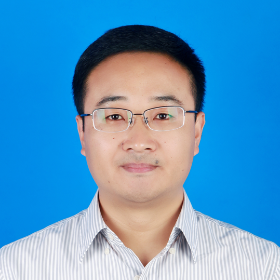
Yuan Li 2D NeuroElectronic Materials, Brain-Inspired Intelligence

Yuan Li is a Professor and Ph.D. advisor at the School of Materials Science and Engineering, Huazhong University of Science and Technology (HUST). He has been selected for China’s National Youth Program of the Overseas High-Level Talent Plan, appointed as a “Huazhong Distinguished Scholar,” and awarded the “Chutian Scholar” title by Hubei Province. He received his B.S. and M.S. degrees from Central South University in 2009 and 2011, respectively, under the supervision of Academician Yexiang Liu and Professor Yanqing Lai. He earned his Ph.D. from the University of Alabama in 2015 and subsequently conducted postdoctoral research in the group of Professor Vinayak P. Dravid at Northwestern University. He joined HUST in 2019. His research focuses on two-dimensional optoelectronic materials and their neuromorphic computing applications. He has published over 80 peer-reviewed papers in journals such as Advanced Materials, National Science Review, Science Bulletin, Advanced Functional Materials, and ACS Nano, and holds 23 patents (China/US/international). He has led major national research projects, including the National Key R&D Program, the NSFC Regional Innovation Development Joint Fund (Key Project), and the Major Project of the Hubei Natural Science Foundation. He has organized six national and international academic conferences and delivered 32 invited talks worldwide. He currently serves as a youth editorial board member for InfoMat, Chip, and Brain-X, and as a reviewer for over 20 journals including Nature Electronics, Advanced Materials, Advanced Functional Materials, and ACS Nano. He received the 2024 Major Academic Achievement Award from HUST.
Research More >
2D NeuMat Lab focuses on two-dimensional materials for brain-inspired perception and computing. Research includes material design, wafer-scale fabrication, and integration of sensing, memory, and computing functions. Key topics: 2D memristors, optoelectronic synapses, polarization vision, and neuromorphic hardware for edge AI and brain–machine interfaces.